Most performance upgrades can pass Ontario inspections if they are safely installed, emissions equipment remains intact, and no warning lights are present. ECU tuning, cat-back exhausts, brake upgrades, suspension mods, and wheels often pass. Catalytic converter removal, active check engine lights, and unsafe suspension setups usually fail. Ontario inspections focus on safety and compliance, not horsepower.
How Ontario Inspections Actually Work
Ontario vehicle inspections are based on the Safety Standards Certificate (SSC) system. An SSC confirms that a vehicle met Ontario’s minimum safety requirements at the time of inspection. It is required to register or re-register most vehicles in the province.
Inspectors are not judging performance goals. They are checking whether a vehicle is safe and compliant for public roads.
Key areas inspectors evaluate include:
-
Brakes and braking balance
x -
Steering and suspension components
-
Tires and wheels
-
Lighting and electrical systems
-
Structural integrity
-
Presence of emissions equipment
-
Dashboard warning lights
A modified vehicle can pass inspection as long as it does not create a safety hazard or violate emissions rules.
Performance Upgrades That Commonly Pass Inspection
ECU Tuning
A professionally calibrated ECU tune usually passes inspection when:
-
Factory emissions equipment remains installed
-
No check engine lights are present
-
Readiness monitors are functioning normally
Street-focused tuning that prioritizes reliability and drivability is far less likely to cause inspection issues than aggressive race-only calibrations.
Cat-Back Exhaust Systems
Cat-back exhaust upgrades are one of the safest modifications from an inspection standpoint.
They typically pass when:
-
The catalytic converter is untouched
-
The exhaust is securely mounted
-
Noise levels remain reasonable
Most exhaust-related failures come from catalytic converter removal, not cat-back systems.
Performance Air Intakes
Aftermarket air intakes can pass inspection if:
-
Sensors are properly connected
-
No vacuum leaks are present
-
No engine fault codes are triggered
Poor installation is the most common reason intakes cause failures.
Suspension Upgrades
Lowering springs and coilovers are legal when:
-
Ride height remains functional
-
Tires do not rub during steering or compression
-
Suspension travel is not compromised
-
Alignment stays within safe limits
Extreme lowering or unsafe geometry adjustments often fail under safety criteria.
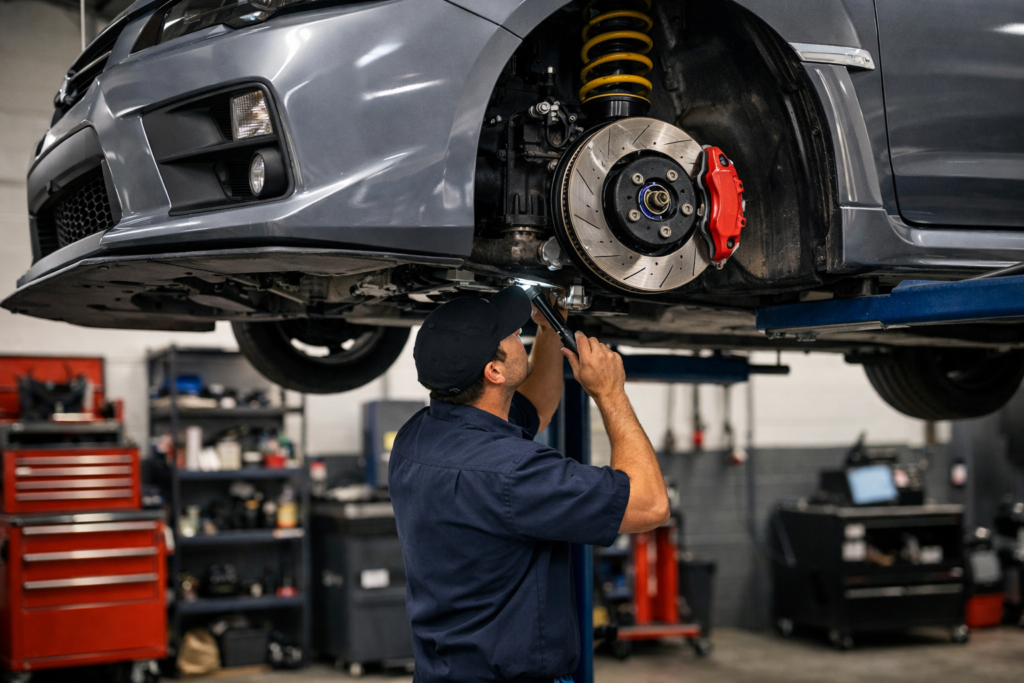
Brake Upgrades
Brake upgrades are generally viewed favorably.
They pass inspection when:
-
Brake lines are secure
-
No leaks are present
-
Braking performance is even and predictable
From a compliance standpoint, brakes are one of the lowest-risk performance upgrades.
Wheels and Tires
Aftermarket wheels and tires pass when:
-
Proper load ratings are used
-
Tires do not contact suspension or body components
-
Wheel offsets do not interfere with steering or braking
Extreme offsets and stretched tires increase inspection risk.
Modifications That Commonly Fail Ontario Inspections
Certain upgrades consistently cause problems during inspections.
Catalytic Converter Removal
Removing or bypassing a catalytic converter almost always results in failure. Ontario regulations prohibit emissions system tampering, even though routine emissions testing is no longer required for most passenger vehicles.
Active Warning Lights
Any illuminated warning light, especially the check engine light, can cause an inspection failure.
Common causes include:
-
Poor tuning
-
Faulty sensors
-
Intake or exhaust airflow issues
Unsafe Ride Height
Vehicles that are excessively low or lack adequate suspension travel may be considered unsafe under the Highway Traffic Act.
Poor Installation or Homemade Modifications
Inspectors closely examine:
-
Loose or poorly mounted components
-
Improvised brackets
-
Unsafe wiring
-
Inadequate fasteners
Even legal parts can fail inspection if installed poorly.
Legal Context That Actually Matters
Inspectors rely on three main legal frameworks:
-
The Highway Traffic Act, which prohibits operating an unsafe vehicle
-
The Safety Standards Certificate requirements, which define minimum safety criteria
-
Ontario emissions regulations, which prohibit tampering with required emissions equipment
None of these laws ban performance upgrades outright. They prohibit unsafe or non-compliant vehicles.
Real-World Inspection Tips for Modified Vehicles
-
Use street-legal parts from reputable manufacturers
-
Avoid removing or bypassing emissions equipment
-
Address warning lights before inspection
-
Get professional installation and documentation
-
Perform a pre-inspection check to catch issues early
Most failures come from shortcuts, not from the modifications themselves.
What Happens If a Modified Car Breaks Down?
Performance and lowered vehicles can still experience mechanical issues, especially after new upgrades or tuning changes. When a modified car becomes disabled, proper towing is critical to avoid further damage.
Flatbed towing is often the safest option for performance cars with low clearance or custom suspension. Using a towing service experienced with modified vehicles helps prevent damage to bumpers, splitters, and underbody components during recovery.
A provider like SMC Towing specializes in professional vehicle transport and recovery, which is especially important for performance and lowered cars that require extra care.